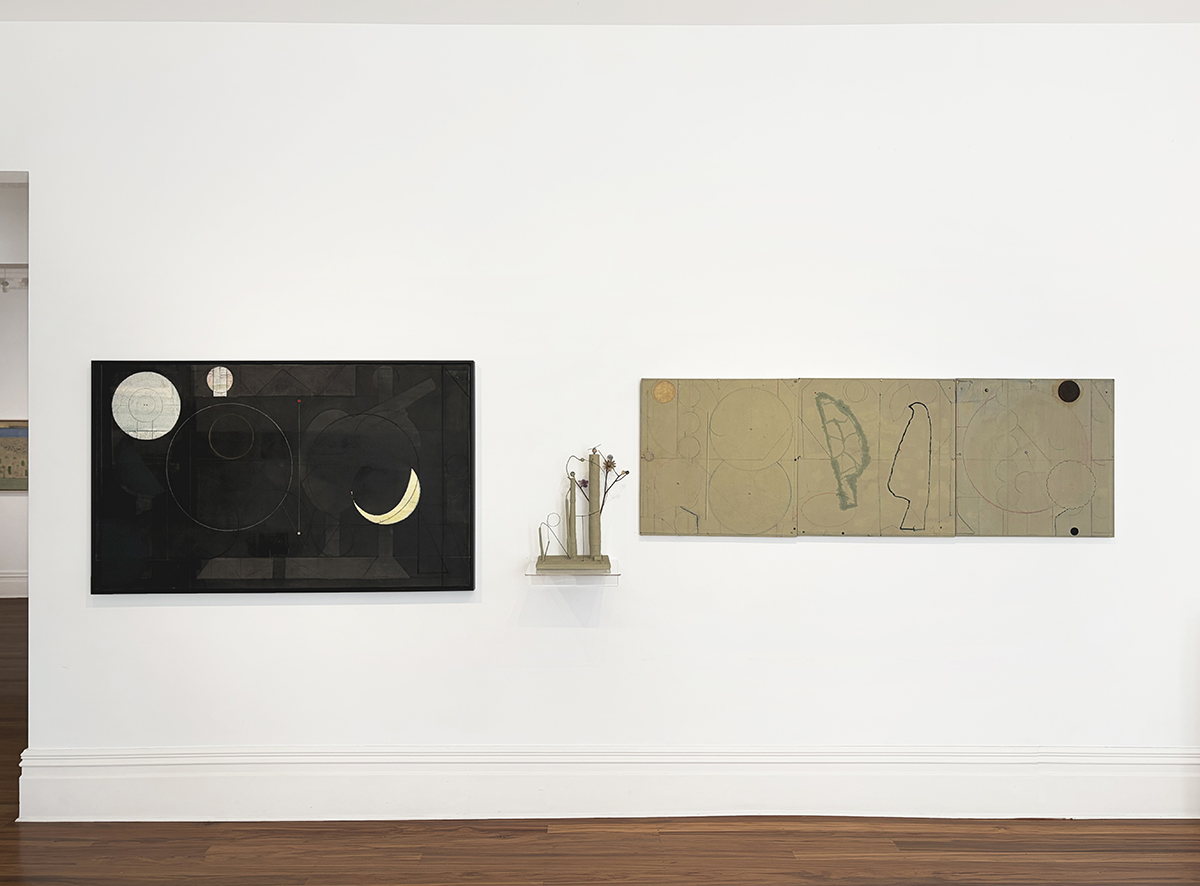
SIMON OGDEN – edge of becoming – 13 Oct – 6 Nov, 2026

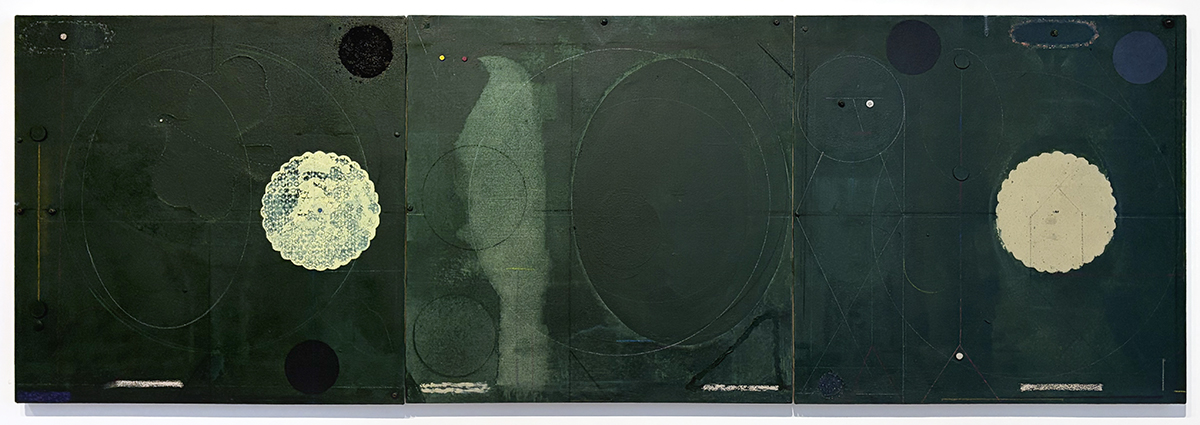
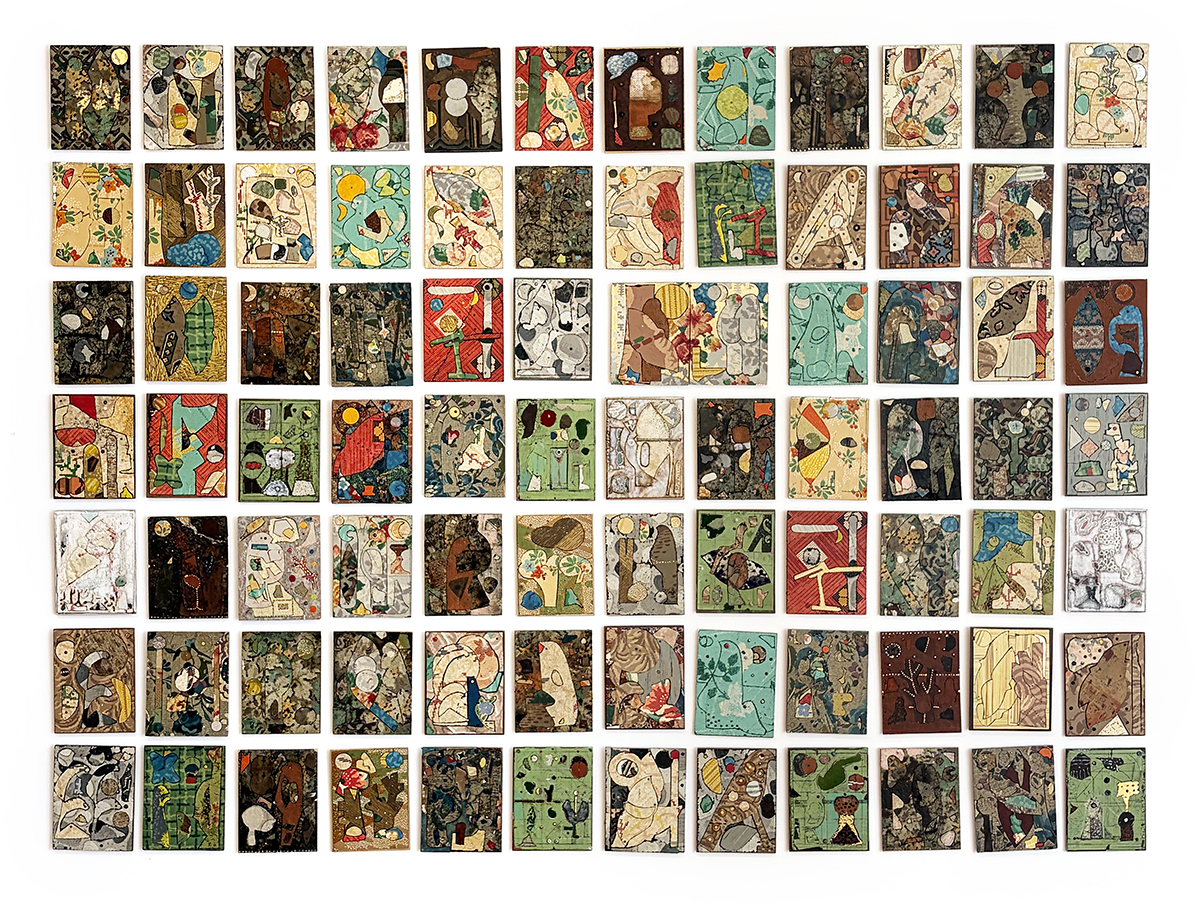
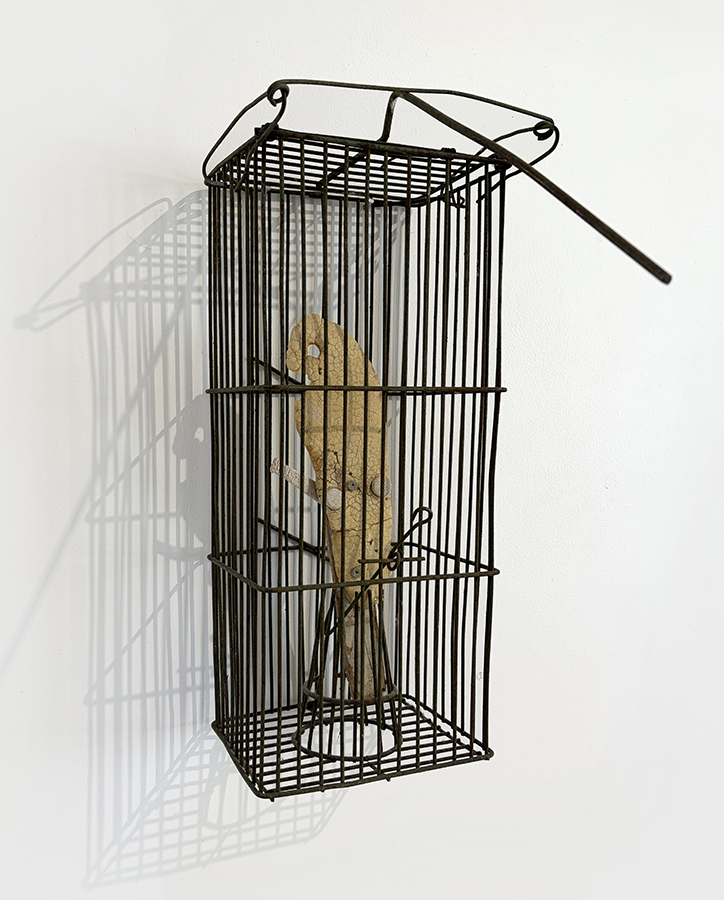
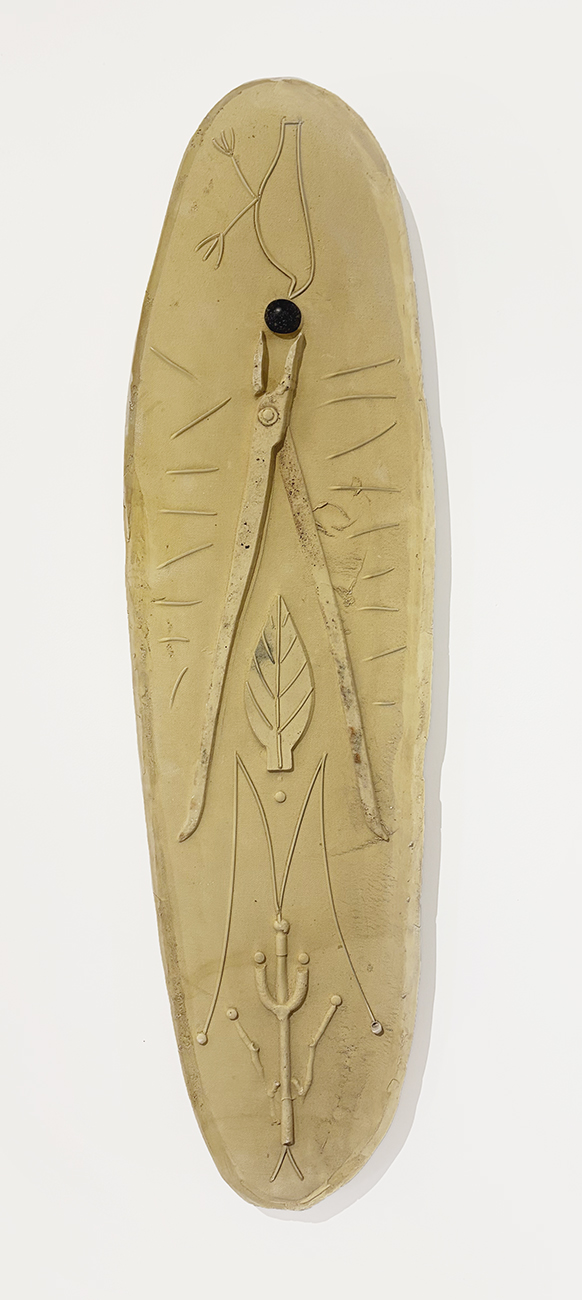
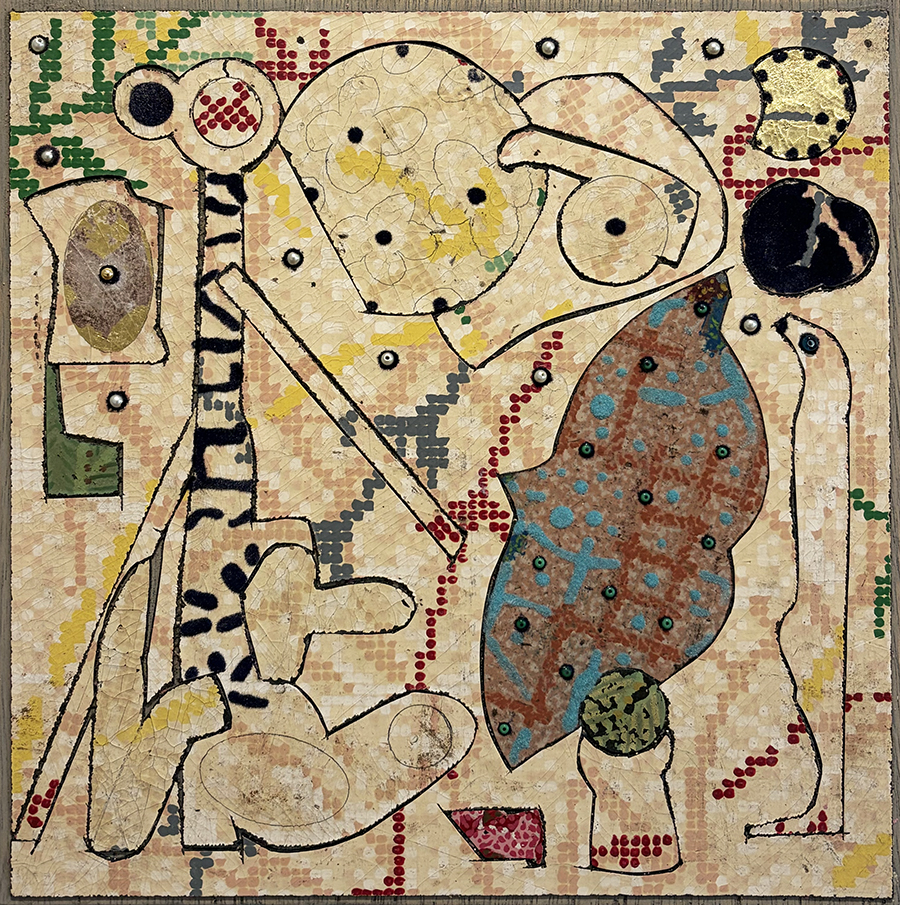
An expansive exhibition featuring linoleum inlay works, paintings on canvas, watercolours and 3-dimensional constructions from the early 2000s to the present.
Two artist-designed rugs, produced by Dilana, are also included.
ARTIST TALK: Sat 17 Oct, 11am
The Shift of Shapes
by Marian Maguire
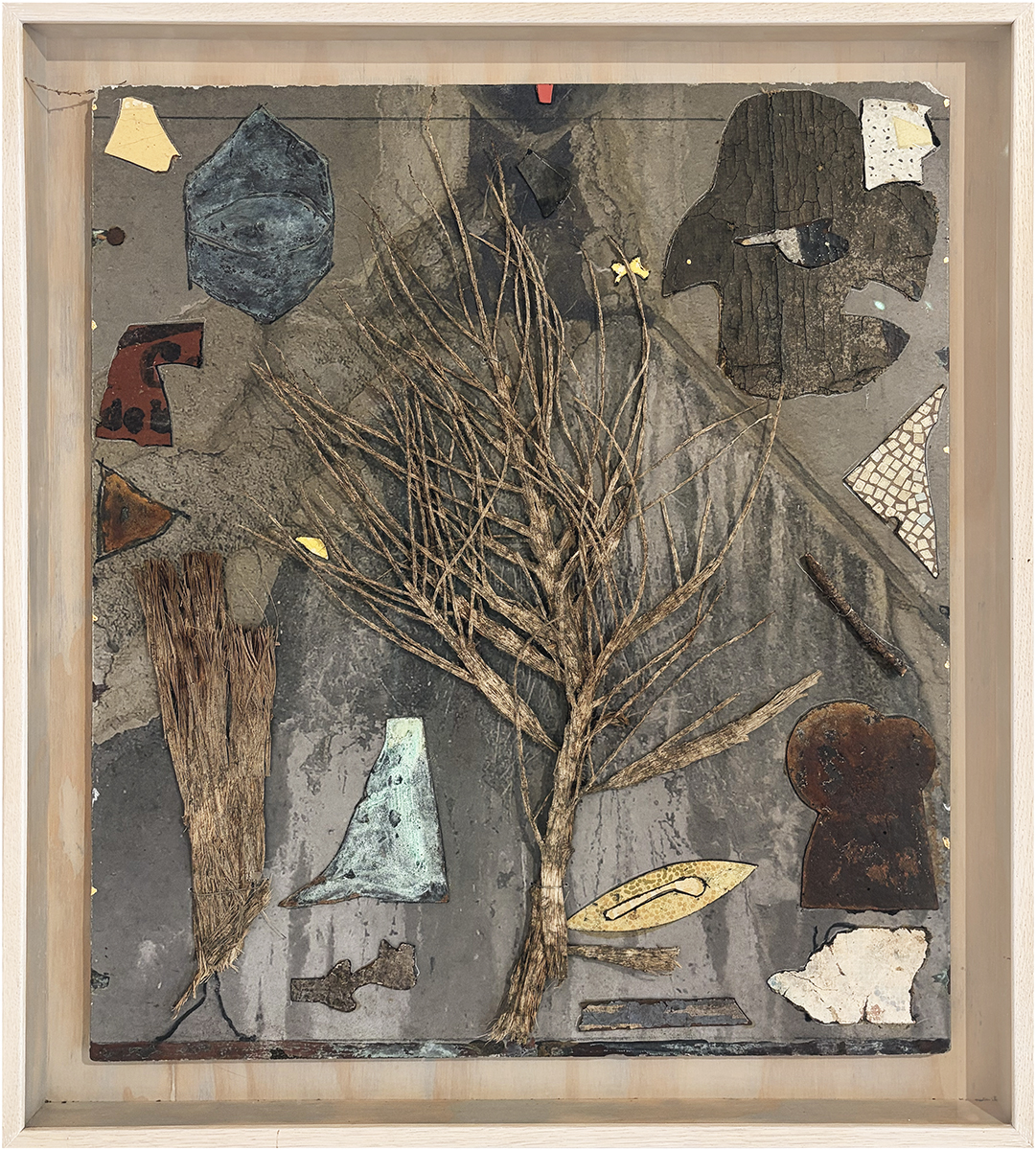
As a child I was warned not to look up at magpies: ‘They collect shiny objects for their nests and will fly down and peck your eyes out.’ Scary warning aside, there is something of the scavenging bird to Simon Ogden. When going places, he scavenges. He mudlarks on the Thames, finding old worn China or strange metal objects of unknown vintage, he Junk Shops wherever he might be, beach detritus catches his eye, and then there are the delights of eBay. Simon Ogden’s home is something of a magpie’s nest. Awhile ago a British show called The Detectorists was screened; a fictional series featuring the lives, loves and travails of fellows who tread fields in the hope that their metal detector might soon start excitedly bleeping because beneath the clod there lies a Roman coin or Saxon hoard. Simon would be out there in a jiffy if he lived somewhere with centuries of metallurgic human history under the surface. He was born in the North of England, Bradford to be precise, and spent his boyhood in Cockermouth in Cumbria, near the border with Scotland. It edges the Lake District, land of daffodils, hedgerows, stone walls, old gates, small creatures, long twilights, mist and myth. The land holds layered histories, it constantly digests lives past. A recent show of his at PG gallery192 was called Digging in the Dirt for Diamonds and the title is telling. Ogden often incorporates found objects and materials, which show the wear and tear of previous life, into his paintings and construction. He sees beauty in the discarded.
…

Formal abstraction using geometric shapes in flat bright colours was his idiom during the early years of his career. Circles, squares and triangles played against each other within the confines of the frame and it was the edginess between parts that brought life to his compositions. Ogden would frequently offset the stability of a rectangle with the dynamism of a diagonal or the roll of a circle and this jostling of parts continues to be an important part of his practice.
In 1994, while artist-in-residence at Dunmoochin Foundation in Melbourne, he moved away from strict geometric abstraction. He shook things up by making two decisive changes. Firstly, he introduced figurative elements – signs of the lived world – and that brought with it the implication of context. The second decision was to open the door to diverse materials and embrace texture and tonal nuance. It should be noted that introducing representation did not bring with it illusory space. Within his work ‘figure’ and ‘field’ always connect on the same plane.
Ogden decided against including the human form as that would suggest narrative. His first figurative inclusions were artefacts, leaves and trees arranged across what might broadly be called a landscape. Birds, being alive and mobile but quite different from us, have proven to be a useful compositional device as they can go anywhere in the picture, their wings provide a defiance of gravity. In our conversation about the bird motif, Simon recalled a Paul Klee book his father owned (his father painted watercolours). One of Klee’s paintings showed birds hanging upside down from the top of the picture which made Simon double-take because: when birds perch it is on top, isn’t it? Seeing Klee’s painting made Simon realise that, as an artist, you needn’t be constricted by reality. You can do what you like within the picture. It has its own internal logic and the artist makes up the rules. Materiality has become intrinsic to Simon Ogden’s studio practice, particularly the linoleum or ply inlays and sculptural assemblages. ‘Assemble’ would seem a good verb to use but he adapts and alters things along the way. Time slippage interests him. The present soon becomes past, the future becomes the present then slips rapidly into the past. Change is the only constant. No moment can be totally fixed, although art does sometimes attempt to pause it, to capture a moment in which everything stands still. The linoleum inlay works suggest the passage of time. Linoleum, a composite flooring material first invented in the 19thC, was ubiquitous 50 years ago but is now largely obsolete. Simon has rescued many kitchen, bathroom and hallway floors before they were ripped up and dumped ahead of renovation or demolition. These floors were trodden on, dripped on, scratched, scrubbed and polished before they arrived as raw materials in his studio. Their individual histories are something many of us might guess at for linoleum surfaced many of our family homes and absorbed the repetitive pacing of our daily existence. Life and lives are inherent in the material itself.
See more in Simon Ogden’s exhibition booklet